
Toronto is full of older brick homes. Walk through neighbourhoods like Leslieville, Roncesvalles, The Junction, or parts of North York and Etobicoke, and you'll see century-old masonry still standing strong. Brick holds up well. Windows, on the other hand, do not last forever.
Many of these homes still have original or decades-old windows that leak air, fog up, stick in winter, or no longer seal properly. The challenge is replacing them without damaging the brick, disrupting the look of the home, or creating long-term moisture problems. Older brick homes come with tighter openings, irregular measurements, and construction styles that modern builds don't use.
This guide explains what makes a replacement window right for an older Toronto brick home, which styles tend to work best, what glass and frame options matter for winter performance, and what the installation process should look like when it's done properly.
Why Older Brick Homes Need Careful Window Replacement
Brick homes built before the 1960s weren't constructed with modern window systems in mind. Many used wood frames set directly into masonry, with little to no insulation around the opening. Over time, wood rots, seals fail, and gaps form between the frame and the brick.
Those gaps matter more than most homeowners realize. Air leaks around windows can account for a large share of heat loss in older homes. Natural Resources Canada estimates that windows and doors can be responsible for up to 25 percent of a home's heat loss, and in older houses with poor sealing, that number can be higher.
Replacement in these homes isn't just about swapping one unit for another. The new window must fit an opening that may not be perfectly square, and the installation must protect the surrounding brick from water intrusion. Done poorly, a new window can cause moisture to collect behind the masonry, which leads to spalling, interior staining, and mould.
Done well, it tightens the building envelope, improves comfort, and preserves the character of the home.
The Best Window Styles for Toronto Brick Homes
Not every window style suits every opening. Older brick homes tend to have tall, narrow openings and a traditional appearance. Here's how the common styles compare.
Casement windows
Casement windows are hinged on one side and crank open outward. They offer the tightest seal of any operable window because the sash presses firmly against the frame when closed. That's a meaningful advantage in a drafty older home.
They also suit the tall, narrow openings common in Toronto's older housing stock. A single casement or a pair of casements can fill an opening that originally held a double-hung wood window, often with better energy performance.
Casements are a strong choice for bedrooms, living rooms, and anywhere ventilation matters. They work well in brick homes because the frame-to-opening fit can be controlled precisely during installation.
Double-hung and single-hung windows
Many older Toronto homes originally had double-hung windows, with two sashes that slide vertically. Homeowners who want to maintain the original look often choose a modern double-hung or single-hung replacement.
Modern versions seal far better than their wood predecessors, with weatherstripping, tilt-in sashes for cleaning, and insulated glass. They preserve the historical character while improving performance. Single-hung windows, where only the bottom sash moves, cost a bit less and seal slightly tighter.
These are the right choice if keeping the home's original appearance is a priority, especially on the front elevation.
Awning windows
Awning windows hinge at the top and open outward from the bottom. They're excellent for basements, bathrooms, and smaller openings where ventilation is needed even in rain. Many older brick homes have small basement windows that are ideal candidates for awning replacements.
Picture and fixed windows
Where ventilation isn't needed, a fixed or picture window maximizes glass area and energy efficiency because there are no moving parts to leak. Combining a fixed centre unit with operable casements on each side is a common approach for larger openings in older homes, giving light and airflow without sacrificing the seal.
Bay and bow windows
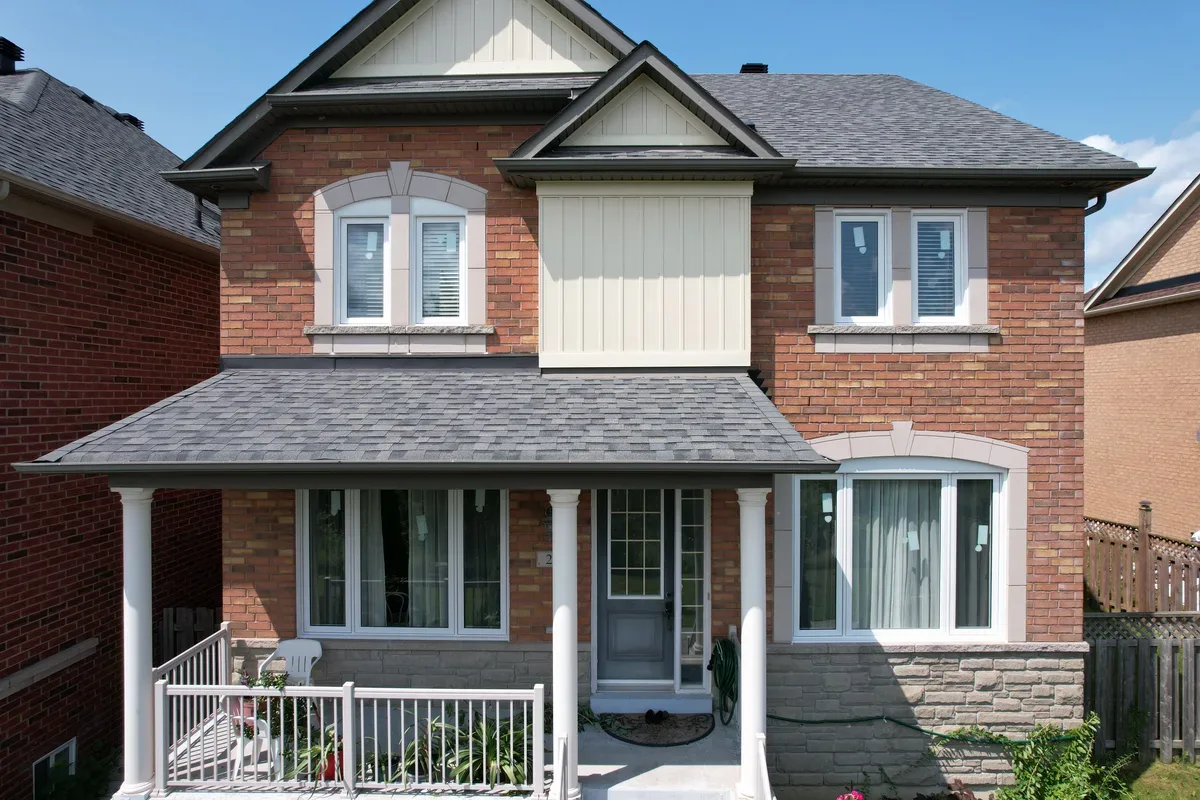
Some older brick homes have, or could support, a bay or bow window on the front elevation. These projecting windows add interior space and light, but they require careful structural support and flashing when installed in masonry. They're best handled by installers with specific experience in brick construction.
Frame Materials: What Works Best With Brick
The frame material affects durability, insulation, maintenance, and how the window looks against brick.
Vinyl frames
Vinyl is the most common choice for replacement windows in Toronto, and for good reason. It insulates well, never needs painting, resists moisture, and is cost-effective. Modern vinyl frames come in colours beyond white, including black and dark bronze, which pair attractively with red or brown brick.
Quality matters. Multi-chambered vinyl frames with welded corners hold up far better in Canadian temperature swings than thin, hollow profiles. For most older brick homes, a well-made vinyl window is the practical choice.
Fibreglass frames
Fibreglass expands and contracts at nearly the same rate as glass, which means seals stay intact longer through freeze-thaw cycles. It's stronger than vinyl, allowing slimmer frames and more glass area, and it can be painted. Fibreglass costs more but offers excellent longevity in a climate like Toronto's.
Wood and wood-clad frames
Wood frames are historically authentic and may be required in some heritage-designated homes. Wood-clad options put aluminum or fibreglass on the exterior for weather protection with wood inside. They're the most expensive option and require more maintenance, but they're the right choice when preserving heritage appearance is non-negotiable.
If your home is in a Heritage Conservation District, check with the City of Toronto before replacing visible windows. Some districts have specific requirements about materials and appearance on street-facing elevations.
Glass and Energy Performance for Toronto Winters
The frame is only part of the picture. The glass unit does most of the insulating work.
Double-pane vs. triple-pane
Double-pane windows with Low-E coating and argon gas fill are the baseline for ENERGY STAR certification in Ontario. They perform well and are suitable for most homes.
Triple-pane windows add a third layer of glass and a second gas-filled space. They're noticeably warmer to the touch in winter, reduce condensation, and cut noise from the street. For older brick homes on busy Toronto roads or in rooms where comfort near the window matters, triple-pane is worth considering. Learn more in our guide to triple-pane vs. double-pane windows for GTA weather.
Low-E coatings
Low-emissivity coatings reflect heat back into the home in winter and block solar heat in summer. In Toronto's climate zone, a Low-E coating is essential for efficiency, not optional.
Argon or krypton gas
Inert gas between the panes slows heat transfer. Argon is standard and cost-effective. Krypton performs better in thin spaces and is sometimes used in triple-pane units.
ENERGY STAR certification
Look for windows certified for Canada's climate zones. ENERGY STAR certified windows must meet specific U-factor and Energy Rating requirements. Our article on whether ENERGY STAR windows are worth it in Canada covers this in more detail.
Installation: Where Brick Homes Differ
This is where older brick homes demand real expertise. A perfect window installed poorly will fail.
Measuring irregular openings
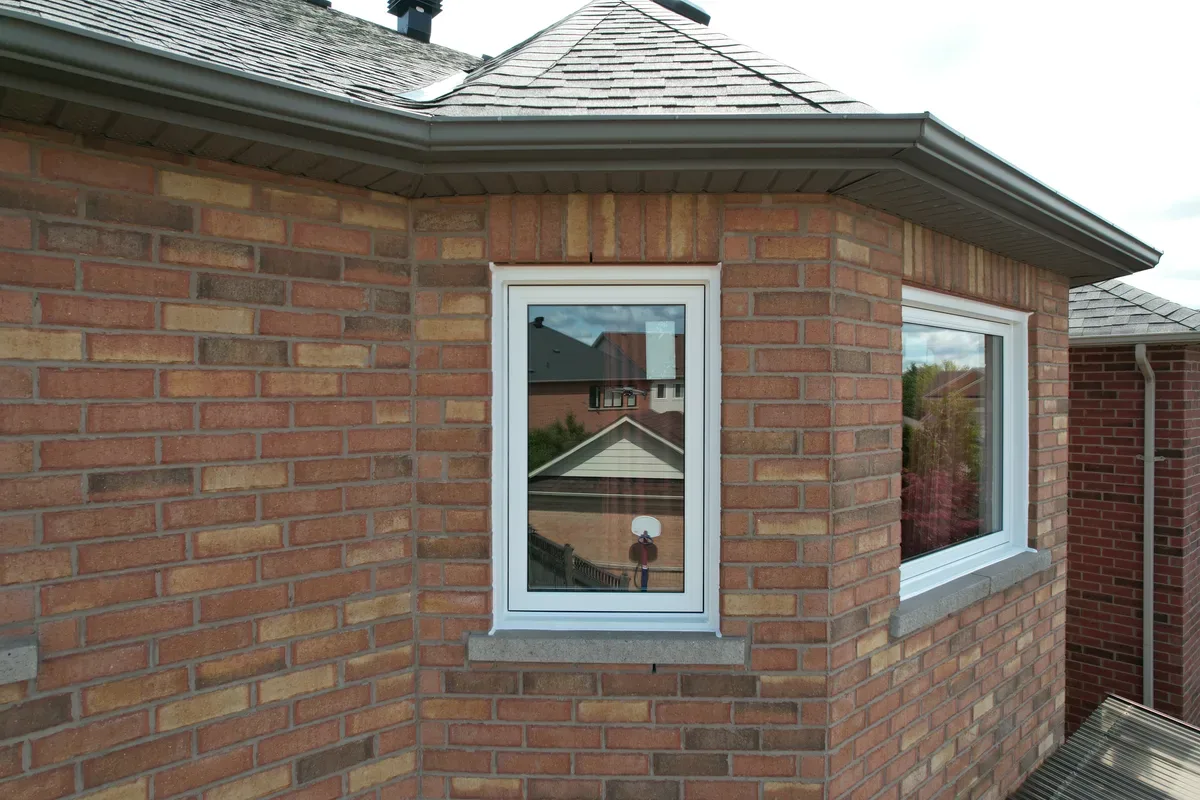
Brick openings in older homes are rarely perfectly square or consistent. Each opening should be measured individually, at multiple points, and the window built to fit. Installers who measure once and order standard sizes often end up with gaps filled with excessive foam or trim, which compromises both appearance and performance.
Protecting the brick
Removing old frames from masonry must be done carefully to avoid chipping or cracking brick and mortar. Experienced installers use techniques that preserve the original opening. Any damage should be repaired before the new window goes in.
Flashing and water management
Water is the enemy of brick. Proper flashing directs water away from the opening and out of the wall. In older homes without modern weather barriers, the installer must create a drainage path that works with the existing construction. This step is often skipped by inexperienced crews and causes problems years later.
Insulation and sealing
Gaps between the frame and the brick should be insulated with low-expansion foam, then sealed inside and out. Over-expanding foam can bow the frame and cause operational problems. The exterior seal should be a high-quality sealant compatible with masonry.
Brick-to-brick vs. retrofit installation
A brick-to-brick (full-frame) replacement removes the entire old window including the frame, exposing the rough opening in the masonry. It allows full inspection, insulation, and flashing. A retrofit installation leaves the old frame in place and fits the new window inside it, which is faster and cheaper but reduces glass area and can hide rot or gaps.
For older brick homes, brick-to-brick is usually the better long-term choice. It costs more, but it addresses the hidden problems that retrofit installations leave behind. Read more about the process in what to expect during your window installation.
Matching Windows to the Home's Character
Older brick homes have a visual rhythm. Window proportions, grille patterns, and trim details contribute to curb appeal and resale value. A few considerations:
- Keep proportions. Tall, narrow openings should stay tall and narrow. Avoid filling an original opening with an undersized window and excess trim.
- Consider grilles. Simulated divided lites or grilles between the glass can echo the original multi-pane look without the maintenance.
- Choose colour thoughtfully. White vinyl is classic, but black or dark bronze frames have become popular on brick homes because they create strong contrast. See our article on black window frames in Toronto homes.
- Match the front elevation. If budget forces a phased approach, replace all street-facing windows at once so the front of the home looks consistent.
Signs Your Older Home's Windows Need Replacing
Not sure if it's time? Common signs in older brick homes include:
- Drafts you can feel near the window in winter
- Condensation or fog between panes
- Frames that are soft, rotting, or peeling
- Windows that stick, won't stay open, or won't lock
- Rising heating bills without a clear cause
- Street noise that seems louder than it should be
Our guide on 5 signs it's time to replace your home windows goes deeper on each of these.
Rebates and Financing for Toronto Homeowners
Replacing all the windows in an older home is a significant investment. Programs change, so check current eligibility, but Ontario homeowners have had access to rebates and financing for energy-efficient window upgrades through programs such as the Canada Greener Homes Loan and provincial initiatives. ENERGY STAR certified windows are typically required to qualify. Our articles on Ontario window rebates and how financing and rebates make energy-efficient windows more affordable explain the options.
Choosing the Right Installer for an Older Brick Home
The installer matters as much as the window. When comparing companies, ask:
- How many older brick homes have you worked on in Toronto?
- Do you recommend brick-to-brick or retrofit for my home, and why?
- How do you handle flashing and water management in masonry openings?
- Who does the installation: your own crews or subcontractors?
- What does your warranty cover, for both the product and the installation?
A good installer will measure every opening, explain the trade-offs clearly, and show you examples of similar work. Our article on what homeowners should ask before hiring a window and door company offers a complete checklist.
Final Thoughts
Older brick homes in Toronto deserve replacement windows that respect their construction and character. The best choices are usually casement or double-hung windows in quality vinyl or fibreglass frames, with ENERGY STAR certified double- or triple-pane glass, installed brick-to-brick by a crew that understands masonry.
Get the fit, the flashing, and the sealing right, and the new windows will keep the home comfortable and protected for decades.
LAB Windows & Doors designs, supplies, and installs replacement windows for older homes across Toronto and the GTA. If you'd like an honest assessment of your home's windows, book a free in-home consultation.